The brackets had their favorites.
The rankings had their predictions.
Iowa had other ideas.
By the time the final whistle sounded at the Brian Keck Memorial Preseason Nationals in West Des Moines, the tournament had delivered exactly what makes early-season national competition so valuable.
Champions had been tested. Highly regarded wrestlers had fallen. Athletes who entered without the same national recognition had forced their way onto the podium.
And Texas had plenty to celebrate.
Tyler Yancey left Iowa with a national championship. Hunter Avalos and Josh Brooks reached national finals. Andrew Tarango battled back from an early upset to finish third.
On the girls’ side, Lucy Clarno and Mila Juarez delivered third-place finishes, while Joanna Henry added another bronze medal for 3F Wrestling.
But the weekend wasn’t simply a story about Texas.
It was a reminder that the distance between a national ranking and a national championship is measured in matches, not reputation.
And some of the most interesting results came from the very divisions Fight Club Media had identified before the tournament began.
Texas Makes Its Statement
The upperclassmen boys gave Texas its first major breakthrough.
Tyler Yancey of 817 Wrestling Club captured the 144-pound championship, finishing ahead of Camron Bennett of Moen Wrestling Academy.
Andrew Tarango of El Paso Texas Wrestling Club finished third in the same division.
Tarango’s tournament was particularly revealing.
He entered as the top seed but suffered an 11–10 upset against Brody Schmitt early in the competition. His championship hopes ended there, but his tournament didn’t. [6]
He worked back through the consolation side to finish third.
Brady McMurtry of BullTrained Wrestling finished eighth, giving Texas three of the eight place-winners at 144 pounds.
At 157, Hunter Avalos gave 817 Wrestling Club another finalist, finishing second to Konnor Fordyce.
At 190, Beau Waldron placed fifth and Chase Catalano seventh. [2]
At least ten Texas upperclassmen finished among the top eight.
Those weren’t projections or rankings.
They were results earned against national competition.
The Younger Boys Finish What They Started
Friday’s preliminary placement listings left several younger-division results unresolved.
By Saturday, the ninth–tenth-grade boys had settled their brackets.
Josh Brooks of Best Trained Wrestling reached the 144-pound championship match, where Adonis Washington defeated him 4–0.
Brooks finished second.
Declan Mohler of 3F Wrestling finished sixth at 106 pounds after losing a 4–1 decision to Andersen Park in the fifth-place match. [3]
Both earned top-eight finishes, adding to Texas’s high school boys’ podium performances.
The 120-pound championship went to Max Burd of Weatherford, Oklahoma, who defeated Maddux Rabczak 10–3.
His title added another notable result in the younger boys’ division.
The performances reinforce an important point about the development of Texas wrestling.
The state isn’t relying exclusively on established upperclassmen.
Its younger athletes are already competing for national recognition.
And those experiences will follow them into the coming UIL season.
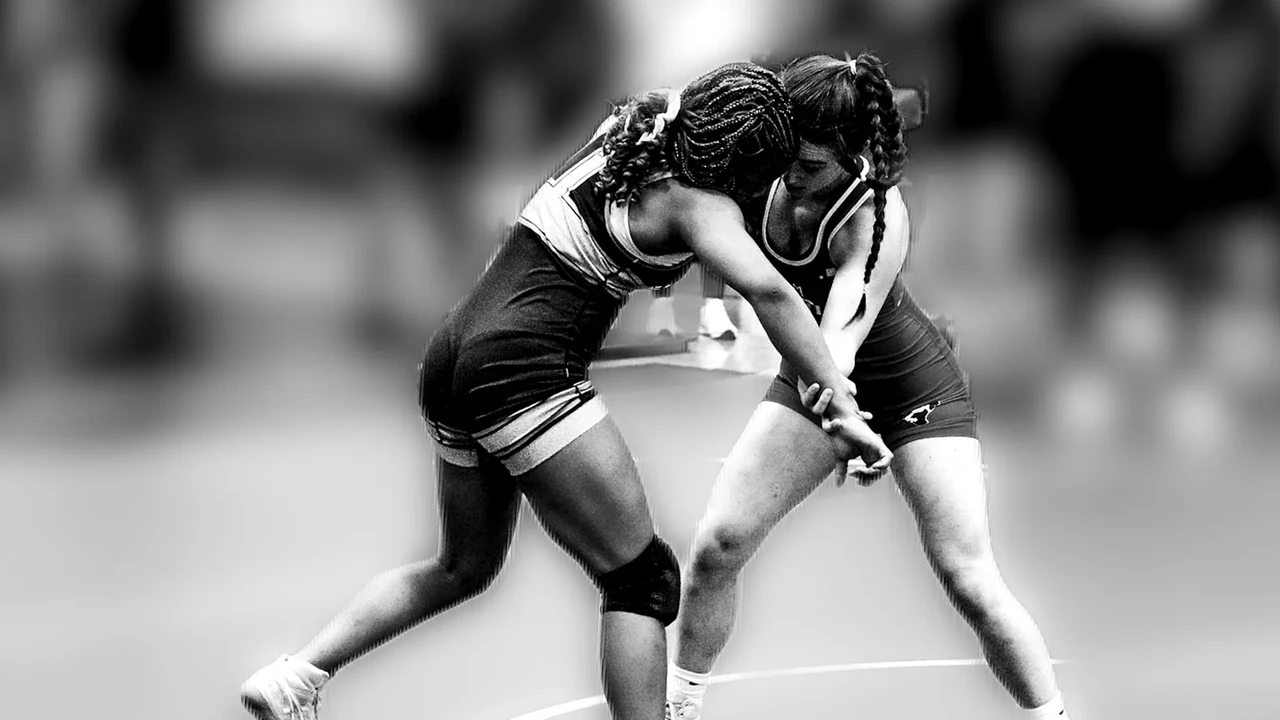
Girls’ 125: The Match That Deserves Another Look
Azyah Rice left Iowa with the 125-pound national championship. Temperance Lowe left with third place.
But there is a compelling argument that Lowe was the best wrestler in the bracket—and that she never should have lost a match.
Her meeting with Carmen Davidson was among the tournament’s most troubling examples of how officiating can change the course of a championship.
Lowe appeared to have Davidson pinned as the opening period expired. The referee’s whistle seemed to signal the fall, only for the sequence to be treated as the end of the period. No pin. No near-fall points. Nothing.
Even if the referee determined that time had expired before the fall was secured, the absence of any near-fall points raises a separate question. Lowe appeared to have Davidson in a position that warranted scoring consideration, yet emerged from the exchange without anything to show for it.
The controversy didn’t end there.
Lowe continued to dictate much of the wrestling, but two unusually aggressive stalling calls awarded Davidson two points. From the action on the mat, those penalties were difficult to reconcile with which wrestler appeared to be initiating the offense.
Then, with only seconds remaining, Lowe lost position in a scramble. Davidson capitalized, securing a reversal and two more points.
Those four points decided the match.
Davidson deserves credit for continuing to wrestle and taking advantage of the late opportunity. But that doesn’t make the preceding officiating decisions any less questionable.
Lowe had appeared to secure a fall, received no near-fall points, and was penalized twice in a match she otherwise seemed to control. There is a credible argument that she should have won by at least two points—and potentially by six or more had the disputed scoring sequence been handled differently.
Instead, Davidson advanced.
Lowe fought back to finish third, defeating Sophia Tamayo 3–0 in the bronze-medal match. Davidson ultimately placed sixth. [4]
Meanwhile, Rice claimed the championship with a 16–2 major decision over Kassie Sapp. [4]
Rice’s performance deserves recognition, although her approach raises interesting questions about how opponents will prepare for her going forward. An unconventional freshman, she frequently initiated attacks from unusually long range, creating exchanges that more traditional wrestlers may not have anticipated.
There is something to be said for a wrestler whose opponents haven’t yet developed a reliable scouting blueprint. The question is whether Rice’s approach remains as effective when future opponents have studied her tendencies and prepared specifically to counter them.
For now, the championship belongs to Rice. She won the matches placed in front of her.
But Lowe’s tournament deserves more than a third-place footnote.
The official standings tell us who received the medals. They don’t necessarily settle who wrestled the best—or whether the officiating gave every competitor a fair opportunity to prove it.
And in Lowe’s case, those questions deserve another look.
Lucy Clarno Makes the Podium at 130
Lucy Clarno entered the weekend with an established Texas résumé.
A 2025 UIL state champion, Clarno had returned to the state podium in 2026 after winning the Region IV-6A championship.
Fight Club Media had identified her as one of the Texas wrestlers worth following.
She justified that attention.
Competing at 130 pounds, Clarno finished third, pinning Brielynn Jackson in 2:45 in the bronze-medal match. [4]
Jackson had entered the tournament with a national folkstyle championship already on her résumé.
Clarno’s victory provided another significant accomplishment against high-level competition.
The division’s championship belonged to Daelin Cody, who pinned Elliotte Strange at 3:42. [4]
Cody had been among the nationally ranked athletes highlighted in our preseason coverage.
She delivered.
Clarno’s third-place finish also reinforced the importance of looking beyond championship matches.
A wrestler can lose the opportunity to compete for gold and still produce one of the tournament’s most meaningful victories.
For Clarno, the result added a national podium finish to an already accomplished high school career.
Texas Girls Find Success Beyond 125
Clarno wasn’t the only Texas wrestler earning recognition.
At 120 pounds, Mila Juarez of 3F Wrestling finished third with a commanding 16–3 major decision over Chloe Medlock.
The championship went to Kaylyn Harrill, who defeated Elizabeth Valenzuela Smith 7–4.
At 155, Joanna Henry gave 3F Wrestling another third-place finish, defeating Julie Cimarusti by major decision, 14–3.
Chloe Wehry captured the championship at that weight with a first-period pin over Eleanor Robertson.
At 130, Iliana Villagrana of Lone Star Mat Club finished fifth, defeating Alyssa Ornelas 7–5. [4]
The results showed Texas athletes finding success across multiple divisions, not simply in the 125-pound bracket that attracted so much attention before the event.
They also demonstrated the value of the club development system.
For programs such as 3F Wrestling, placing multiple athletes on a national podium reflects more than one successful individual performance.
It suggests a training environment capable of preparing wrestlers for the demands of national competition.
The Champions Who Changed the Conversation
Several performances stood out across the high school girls’ championships.
At 115 pounds, Adriana Kunz continued her remarkable run at Preseason Nationals.
After winning two consecutive titles in the sixth–eighth-grade division, Kunz moved into the high school competition and captured another championship.
She pinned Sora Mae Bukoski in just 47 seconds.
Six matches. Six pins.
At 100 pounds, Kylee Ooton defeated Ella Coomes by fall at 2:29, completing a tournament in which she surrendered no points.
At 110, Charlotte Nold and Kirra Mitchell wrestled through six scoreless minutes before Nold secured a sudden-victory takedown for a 3–0 championship.
At 135, Kit Alsaker defeated Carleigh Clark 10–1.
At 140, Ema Durst pinned Franky Groom at 4:59.
At 145, Miranda Lencrerot defeated Jade Chloe Johnson 4–2.
And at 190, Lyla Hensen completed a dominant tournament with a 16–0 technical fall over Bryn Schmidt, finishing the event without allowing a point. [4]
The championships were decided in dramatically different ways.
Some wrestlers overwhelmed their opponents.
Others survived matches in which a single takedown separated victory from defeat.
Both kinds of performances reveal something about the level of women’s wrestling.
Technical precision matters.
So does the ability to perform when the margin for error disappears.
The Next Generation Is Already Here
In Part 4 of this series, Fight Club Media examined the women who helped create the opportunities today’s young wrestlers now enjoy.
Kristie Davis. Adeline Gray. Helen Maroulis. Amit Elor. Kennedy Blades.
Their accomplishments helped establish a standard that once seemed unimaginable for American women’s wrestling.
At Keck, the consequences of that progress were visible in the youngest divisions.
The registration list contained 1,150 girls across four grade groups, from first and second grade through high school. [7]
Sunday’s competition provided a glimpse of what those opportunities are producing.
In the sixth–eighth-grade division, Julie Fleming, Freyda Nelson and Regan Kinneman repeated as champions.
Avery Haber began another pursuit of the USA Wrestling Triple Crown with a championship at 95 pounds.
Mila Sebolt, Sydney Daxberger, Paris Turner, Brekyn Boyle and Lily Blakesley captured titles by fall.
At 180, Brielle Molina defeated Katherine Lupardus of 817 Wrestling Club in two close decisions, 1–0 and 4–0. [5]
In the third–fifth-grade division, Oakley Waitkus and Bristol Pope defended their Preseason Nationals titles.
And among the youngest girls, Emmy Lashaway captured another championship while Harper Atkinson won her final in just 24 seconds. [5]
Those athletes are years away from the college recruiting process.
Some are years away from high school.
But they are already learning how to compete, how to handle pressure and how to win against unfamiliar opponents.
The future of women’s wrestling isn’t something waiting to arrive.
It’s already wrestling.
What Keck Means for the Season Ahead
The Brian Keck Memorial Preseason Nationals is not Fargo.
It doesn’t conclude a season or settle the national hierarchy.
It opens a new competitive chapter.
The wrestlers who succeeded in Iowa now carry those results into their high school schedules.
The wrestlers who struggled have months to address what the tournament exposed.
For Texas, the weekend offered substantial encouragement.
Yancey proved he could win a national championship.
Avalos and Brooks reached finals.
Tarango recovered from an early defeat to earn bronze.
Clarno, Juarez and Henry delivered significant girls’ podium performances.
And younger wrestlers across the state gained experience against national competition.
But the results also challenged some of the expectations that preceded the event.
Not every nationally accomplished athlete reached the podium.
Not every projected matchup happened.
And some of the most important victories came from wrestlers who had attracted less attention before the tournament began.
That’s why they wrestle the matches.
Rankings provide a starting point.
The mat provides the answer.
The Results Will Matter Long After Iowa
Years from now, some of the athletes who competed in West Des Moines may be wrestling in college.
Others may represent the United States internationally.
A few may become names recognized far beyond the wrestling community.
And some will remember this weekend because it was the first time they realized what competing at the national level truly requires.
That is the value of a tournament like Keck.
It gives accomplished wrestlers an opportunity to prove themselves.
It gives emerging athletes an opportunity to be discovered.
And it gives everyone else a clearer understanding of what separates them from the next level.
Texas came to Iowa with expectations.
It left with champions, finalists, All-Americans and lessons that will shape the season ahead.
The preseason is over.
Now the real work begins.
Sources
- USA Bracketing: Official event and results
- USA Wrestling: Upperclassmen boys medal results
- USA Wrestling: Ninth–tenth-grade boys medal results
- USA Wrestling: High school girls finals and medal results
- USA Wrestling: Grade school girls championships
- USA Wrestling: Opening-day results and Tarango–Schmitt upset
- Fight Club Media: Part 4 and the registration snapshot
The Lowe–Davidson officiating discussion reflects Fight Club Media’s eyewitness observations and editorial interpretation. Official results establish recorded outcomes; they do not establish a finding of officiating error.