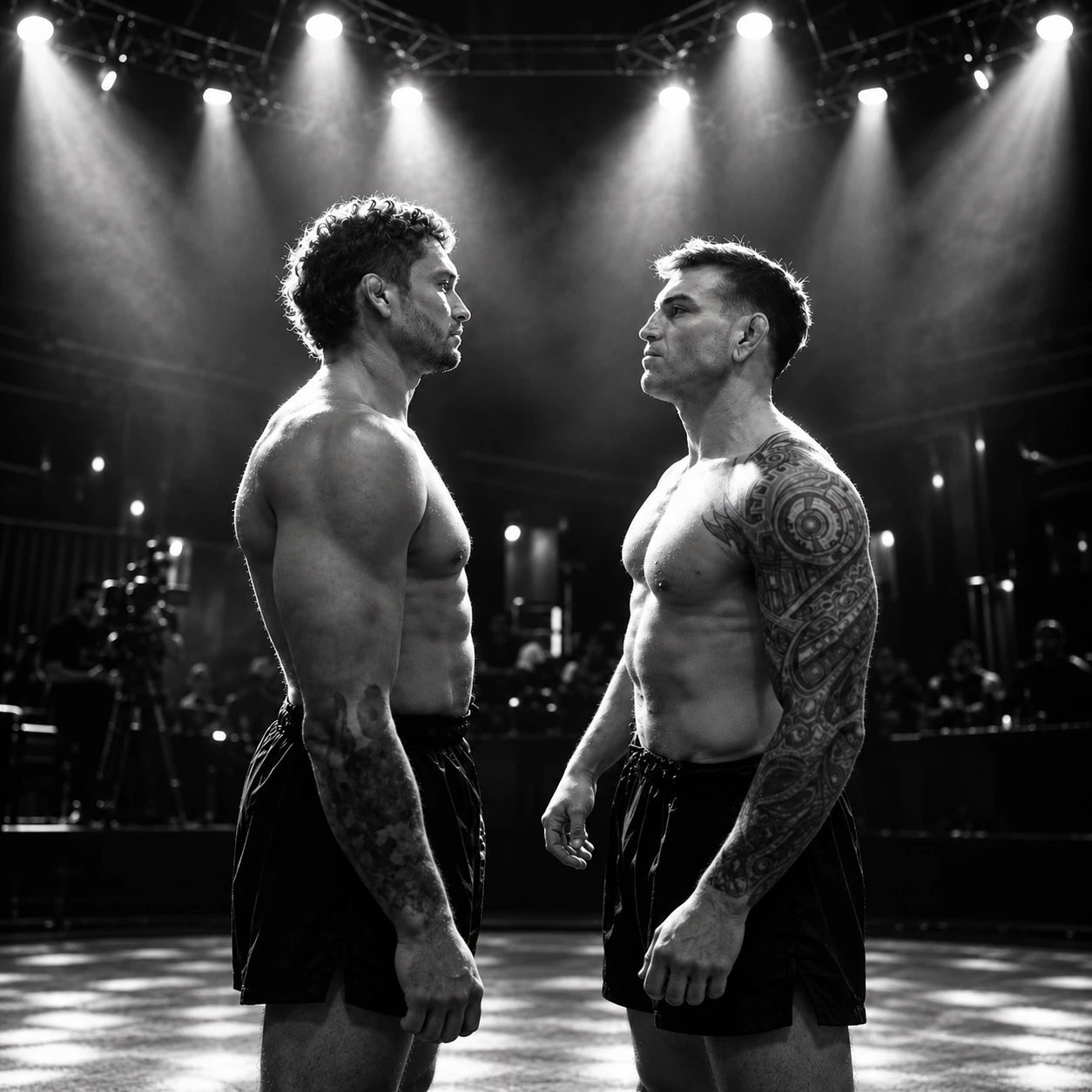
A submission settles an argument in a way a scorecard never quite can. UFC BJJ 11 offered several of the former and one very durable example of the latter. Mason Fowler kept his light heavyweight championship after a split draw with Nick Rodriguez, leaving the audience to debate what the judges had valued and what a challenger must actually do to take the belt.
The match contained real changes of initiative. Fowler found Rodriguez’s back in the opening round. Rodriguez’s later pressure included a strong final round with mount and a choke attempt. Those are exactly the kinds of sequences a good judging system should help an audience compare. The split draw made the comparison the main conversation after the match.
The temptation is to announce that the wrong man had his hand raised and move on. A more useful question is whether viewers can understand how the announced result follows from the criteria. Close judgments will always exist. A promotion has a bigger problem when spectators cannot explain what separates a winning round from a losing one, or why one extended threat outweighed several minutes of later control.
Mikey Musumeci beat Bryce Mitchell by unanimous decision in the main event. There were enough sharp changes of position and physical drama to make survival an active subject rather than a quiet one: Musumeci threatened the neck and arms, while Mitchell supplied stubborn defense and a forceful slam during a flying-triangle attempt. The special agreement excluding leglock finishes also mattered; this was not an unrestricted test of Musumeci’s complete submission arsenal.
The women’s match deserved more than a line below the headliners. Former champion Aurelie Le Vern beat Rana Willink by unanimous decision. Le Vern’s back attacks and arm threats, and Willink’s late leglock attempt, made it another useful example of action without a finish. An athlete can be defensively impressive and still lose clearly because the opponent creates more of the consequential offense.
There were finishes elsewhere. Jay Rodriguez submitted Kevin Beuhring with an inverted D’Arce; Daniel Deeder finished Kolby Gonzalez with a third-round Kimura; Mason Stritzel submitted Sebastian Zazueta with a heel hook. Deeder and Stritzel also gave the new Open pathway an immediate promotional success story.
UFC BJJ’s professional format uses three five-minute rounds, with one-minute rests, and a 10-point-must judging system. Its criteria prioritize effective grappling, including genuine submission danger, over simply accumulating the positional points familiar from other tournaments. This changes how an athlete manages time. A strong first round remains on a scorecard even after the next round begins in a fresh position.
That structure differs from IBJJF’s continuous points-based matches and ADCC’s distinctive periods with and without positive scoring. Round breaks can make a broadcast easier to follow, create moments for coaching adjustments and give a casual viewer a familiar unit of competition. They can also interrupt a position an athlete spent considerable time building. Neither effect is trivial to the people competing.
Could this become the standard? It could become an influential professional format. Becoming the universal rule set is a much larger proposition. Gi competition, youth divisions and open amateur tournaments solve different problems from a televised card. Even UFC’s own Opens use a separate rulebook; the professional three-round format should not be assumed to govern every participant who enters an event under the brand.
The championship draw is therefore useful evidence, not a final verdict on the experiment. The promotion needs judging that athletes can prepare for and fans can understand. It also needs the discipline to explain an unpopular result without pretending every frustrated viewer failed to appreciate subtle technique.
UFC BJJ 11 had exciting offense, meaningful women’s competition and newcomers who finished on their first big appearance. Those are assets. The challenge is building a system in which the next Fowler–Rodriguez debate centers on excellent grappling rather than uncertainty about how the evening’s most valuable prize was decided.