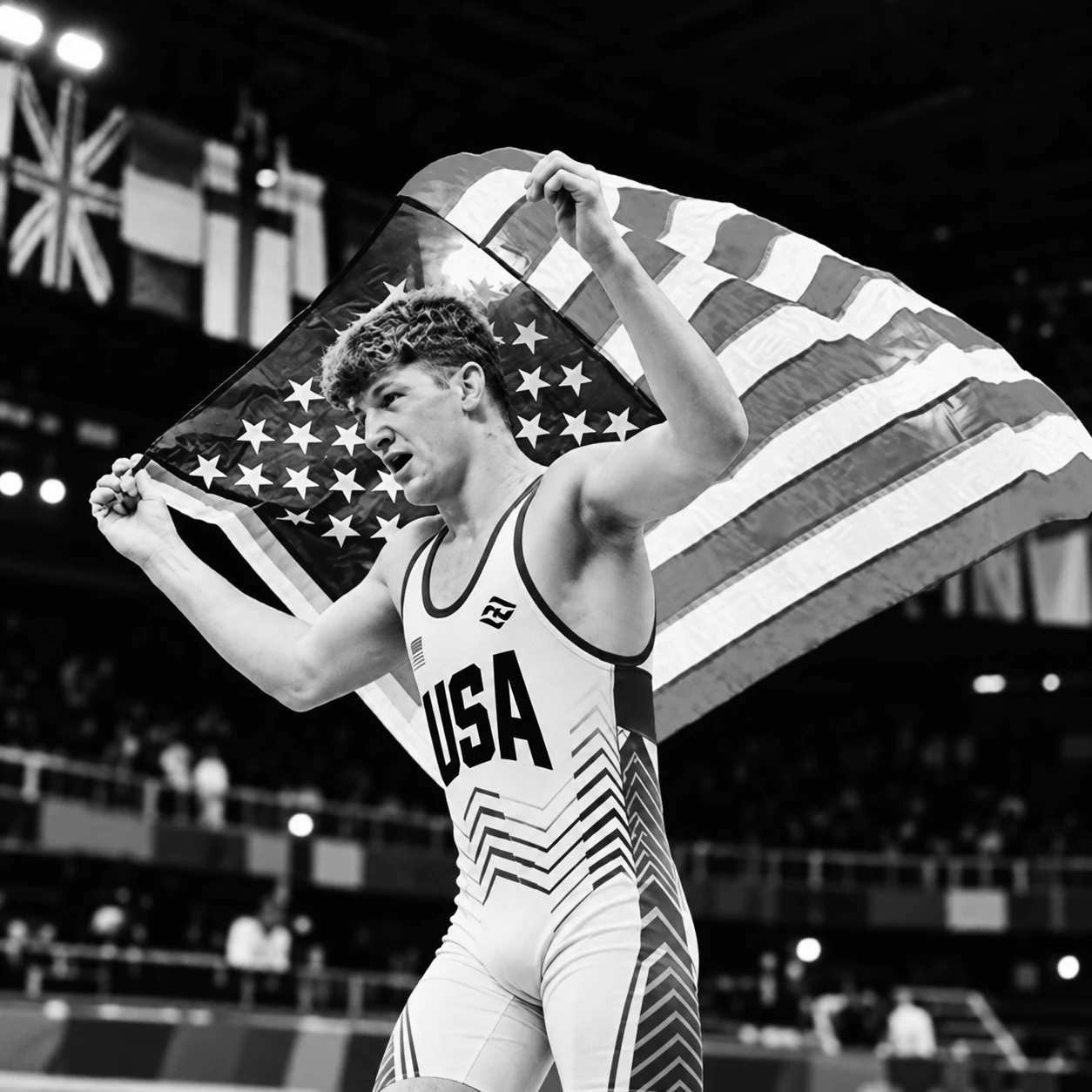
There was no empty weight class in the American medal column. At the 2026 U20 World Championships, the United States put all ten men’s freestyle wrestlers on the podium, turning individual results into an unusually complete team performance. Four golds, three silvers and three bronzes produced 205 points and a third consecutive world team championship.
Russia finished second with 155 points. Japan followed with 130, and Iran scored 103. The American margin was substantial, but the distribution mattered as much as the total. A medal at every weight meant the team continued producing across the entire lineup.
Michael Boyle supplied the final gold at 97 kilograms. The 17-year-old defeated Russia’s Rodion Sanakoev 12–2, taking a match that stood at 1–1 at the break and ending it by technical superiority in the second period. Jayden James and Dreshaun Ross added silvers on the closing day, while Landon Robideau’s bronze at 70 kilograms completed the ten-for-ten medal collection.
That last part deserves emphasis. A team title can be carried by champions, but a complete medal performance also requires athletes to keep finding wins after gold is no longer available. The consolation side of a world bracket is populated by wrestlers who have already shown they belong there. A bronze medal is earned against that remaining field, not handed out for staying in the tournament.
The result gives American wrestling a useful measure of the talent arriving at a critical age. U20 competition sits near a demanding transition: athletes are developing toward senior international careers while many are also entering or establishing themselves in college. A championship at this stage is evidence of readiness for further challenges, even though it cannot settle what those careers will become.
For readers who followed Fargo, Bratislava provides another view of the same larger subject—how a country develops wrestling depth. National tournaments reveal how many strong competitors are emerging. World championships test a selected group against the best available international opposition. The U.S. lineup met that second test with remarkable consistency.
The temptation after a weekend like this is to predict a future full of senior medals. That future still has to be earned. Opponents will change, weight classes will change and the demands will grow. What the Americans already earned in Slovakia needs no prediction to make it impressive.
Ten entries became ten medalists. For a team competing against the world, there are few clearer ways to demonstrate that everyone contributed.