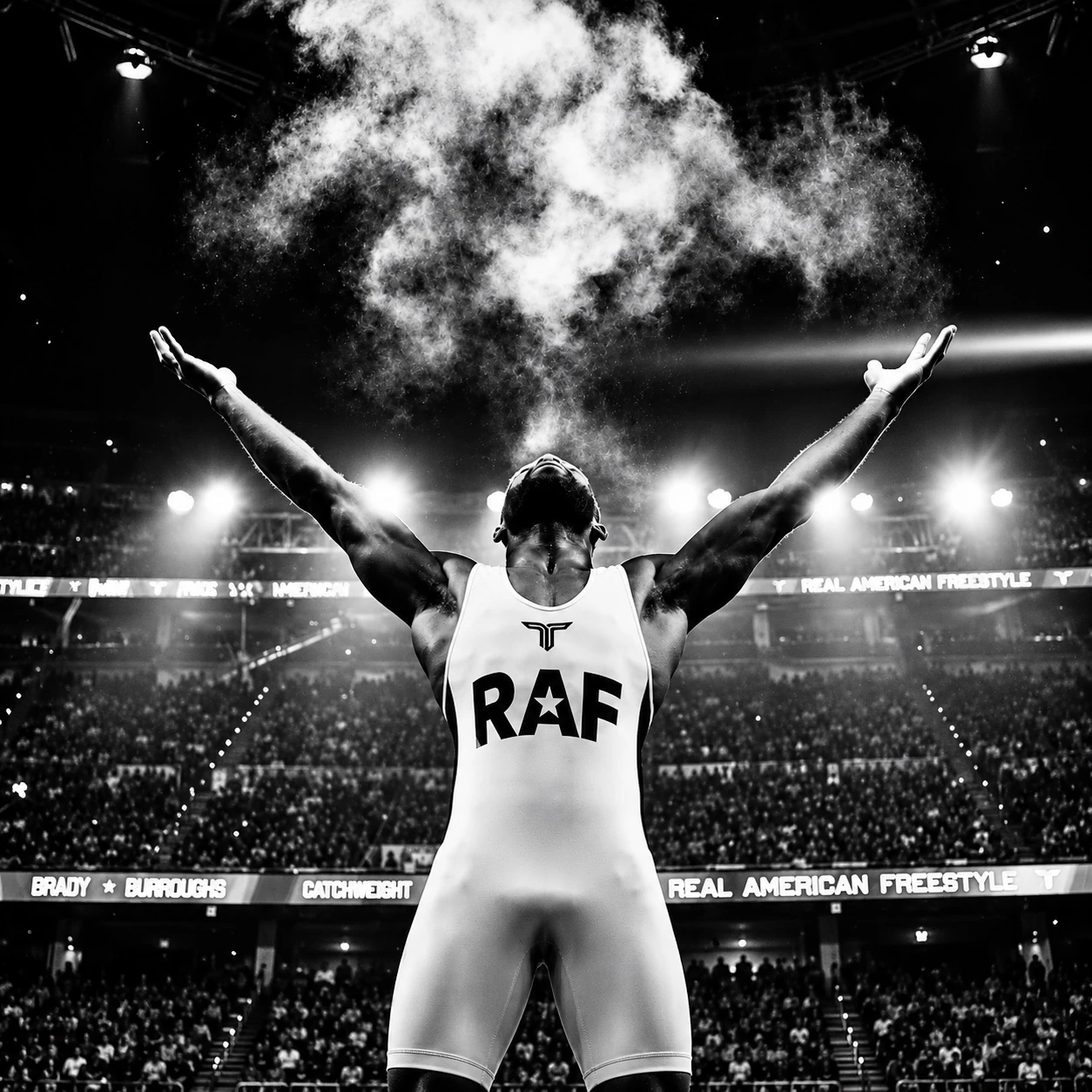
Jordan Burroughs returned to competition and made the essential point quickly: a famous opponent and a new promotional setting do not change the work required to wrestle him. At RAF 12 in Cleveland on August 22, the Olympic champion beat UFC welterweight Sean Brady 11–0 by technical fall. The name on the marquee was familiar. So was the distance between elite freestyle execution and a game attempt to survive it.
Burroughs built a 7–0 lead in the opening period and added the points needed to finish the match after the break. Brady brought real combat-sports credentials into Rocket Arena. Burroughs brought a career spent making accomplished wrestlers look late to positions they knew were coming. The crossover attraction worked because the contrast was visible, not because the match was close.
It would be a mistake, however, to reduce the card to Burroughs and a guest from the UFC. RAF put several different wrestling worlds into the same building. Olympic medalists, NCAA champions, active college talent and MMA names shared a card that offered more than one answer to the question of what professional wrestling competition might look like without a scripted finish.
Henry Cejudo supplied the quickest headline. He pinned Merab Dvalishvili in 36 seconds in their rematch. Gable Steveson beat Anthony Cassioppi 6–0. Kennedy Blades recorded an 11–0 technical fall over Reese Larramendy. Those results gave the evening substantial Olympic and collegiate weight beyond the Burroughs appearance.
The upset worth circling was Max McEnelly’s 3–2 win over Bo Nickal. Nickal’s college résumé and UFC visibility make him one of the easiest names to promote across audiences. McEnelly’s victory supplied the necessary correction to celebrity logic: recognition does not award the next point. A current competitor who can solve the actual match is more dangerous than a billing order suggests.
Jason Nolf beat Evan Wick 11–1, while Jesse Mendez defeated Olympic champion Vladimer Khinchegashvili 7–2. David Carr also beat Tajmuraz Salkazanov. These were not anonymous preliminaries surrounding an MMA exhibition. They gave knowledgeable wrestling fans reasons to watch the whole card and gave newcomers a path from the recognizable UFC names toward the specialists.
Tyron Woodley and Joaquin Buckley provided another unmistakable MMA crossover, with Woodley winning 14–8. Masanosuke Ono defeated Ben Davino 4–0, and Johnni DiJulius beat Asu Almabayev 10–0. Put those matches beside the headliners and the appeal becomes clearer: the show could move between generations, competitive backgrounds and kinds of name recognition without leaving wrestling.
That mixture is also the promotion’s balancing problem. Crossovers can bring attention. Competitive matchmaking has to retain it. A viewer who arrives for a UFC personality needs a reason to care about the next wrestler after that personality has left the mat. Close results, emerging stars and meaningful repeat appearances are the foundation of that relationship.
Burroughs provides a particularly useful measuring stick because his greatness is legible. The pressure, timing and scoring do not require a long promotional explanation. Yet the long-term value of RAF cannot depend on asking established legends to lend the project credibility indefinitely. It has to make its own present-tense rivalries matter.
Cleveland offered evidence of how that can happen. Burroughs delivered the authoritative return. Cejudo delivered the abrupt ending. McEnelly delivered a result that challenged the expected hierarchy. Nolf, Mendez, Carr, Steveson and Blades made the wrestling audience feel that it had been invited too. That is a much stronger show than one famous name beating another famous name and everybody going home.