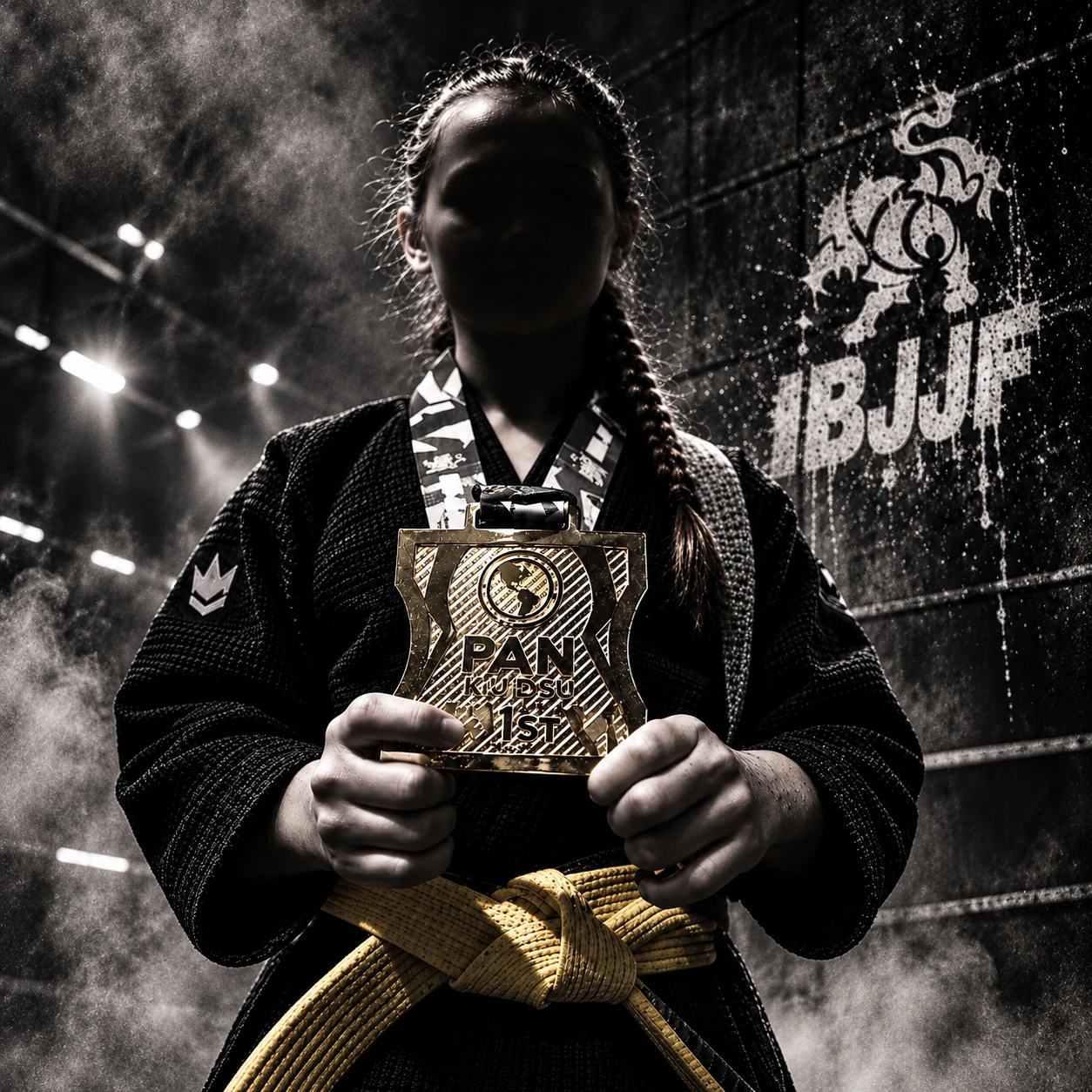
The teenagers at Pan Kids were not waiting around to become interesting. They already had rivalries, pressure and brackets capable of ruining a perfectly good family vacation. The July 24–26 championship in Kissimmee put that talent in one place, and the results made a persuasive case for watching the next generation before somebody hands it a professional contract.
Gracie Barra won the Teen team race with 184 points, ten ahead of AOJ. Alliance finished third with 94. AOJ took the overall team championship with 437 points, ahead of Gracie Barra and Alliance. The difference between those standings matters: the academy with the strongest tournament overall did not automatically own the teenage divisions.
Three champions offer a useful starting point. Aiden Wang won the male Teen 1 yellow-belt featherweight division for AOJ, ahead of Dream Art’s Nicolas Silva. Charley Caballero won female Teen 3 green-belt featherweight for Gracie Barra. Frankee Lynne Truong took female Teen 2 grey-belt featherweight for Lebre Jiu-Jitsu Academy. Their titles came at different points in the youth development system, which is precisely why putting all young competitors into a single conversation misses so much.
Wang’s run was especially worth following. He won four matches, ending with Silva in the final. A four-match championship asks a young athlete to keep solving fresh problems while fatigue, nerves and expectations accumulate. A strong first round is one thing. Producing the same quality of decision-making again, and again, is how a prospect begins to look like a reliable competitor.
Caballero’s result deserves attention at the older end of the event. Green belt is the top tier of the children’s belt system; winning there puts an athlete close to the next transition in competitive life. The medal rewards what she has already built. The more interesting question is how that game travels as the opponents become older, stronger and harder to surprise. A youth championship is an achievement, not a guarantee, but it is a fine place to start asking those questions.
Truong’s championship is a reminder that the grey-belt brackets deserve coverage too. Youth reporting can become a private club for the same handful of highly promoted names. There are excellent performances elsewhere in the building, and a division title does not become less real because an athlete has fewer followers. The podium list is useful partly because it widens the field of view.
For Texas gyms and families, Pan Kids is also a test of the work nobody photographs. Coaches repeat the same corrections. Parents organize travel. Training partners provide resistance long before anyone knows whether the season will end with a medal. When a young athlete makes the right adjustment under pressure, a whole network of ordinary effort is briefly visible.
Pan Kids divides its teenage competitors into Teen 1, Teen 2 and Teen 3. Each age group brings its own stage of development, its own rivalries and its own reasons to pay attention.
The most useful way to read the weekend is with two thoughts at once. These results deserve to be taken seriously. These athletes also deserve room to keep growing. Celebrate the championships, learn the names, and keep watching when the next bracket is less cooperative.