There is a particular kind of trouble waiting in a masters bracket: an opponent who has already seen your favorite idea, knows what it costs to stop it and is perfectly willing to let you waste energy proving the point. World Master is full of those people. Some are famous. Some have a job to return to on Monday. None is required to be impressed by your first explosive minute.
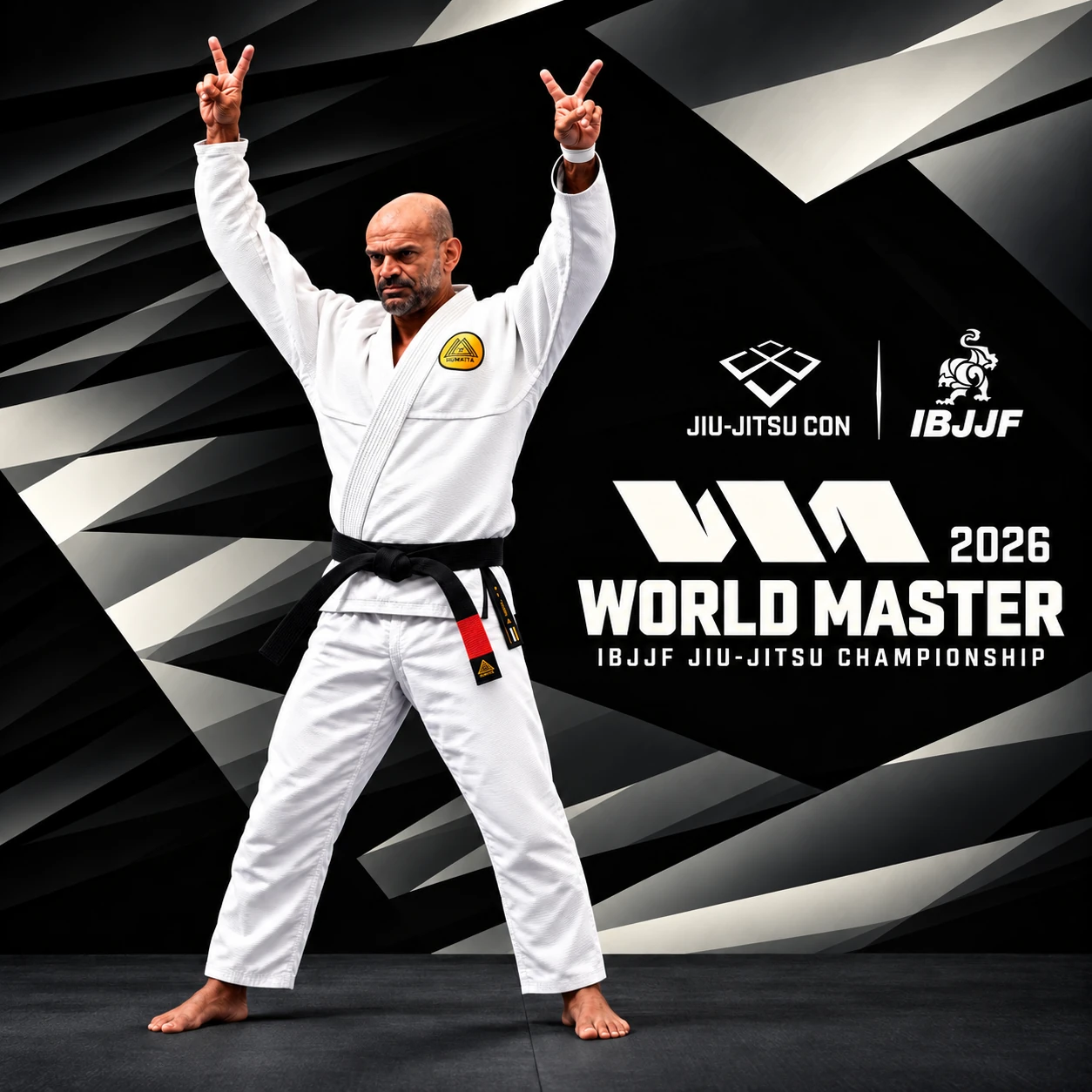
The 2026 IBJJF World Master Championship in Las Vegas deserved to be treated as a serious competition on those terms. Alliance won both the men’s and women’s team standings. Among the black-belt champions were João Miyao at Master 1 roosterweight, Fellipe Andrew at Master 1 heavyweight, Bibiano Fernandes at Master 4 featherweight and Bruno Bastos at Master 4 ultra-heavyweight. Those names alone should retire the idea that an age-group championship is automatically a soft option.
The difficulty often changes shape. A mature competitor may be better at distinguishing danger from discomfort, more willing to accept a temporary disadvantage and less likely to chase a highlight at the expense of the match. Experience can make someone economical. It can also make them deeply irritating to grapple: the right grip, the right angle, a small adjustment that closes a route you thought was open.
Then there is dad strength, the unofficial division nobody puts on the registration form. The phrase is funny until a calm-looking man establishes a collar grip that feels bolted to the floor. Part of the sensation is physical strength; part is accumulated skill in where to apply it. Years of useful pressure are difficult to distinguish from horsepower when you are the person underneath them.
The women’s brackets make the same point without the dad joke. Ingridd Alves de Sousa won Master 1 black-belt medium-heavy and the open class; Mayara Custódio won Master 2 black-belt super-heavy and open. Those double titles demonstrate repeat performance across different matchups, not merely success against one conveniently similar opponent.
None of this means older athletes possess automatic emotional wisdom, or that youth has a monopoly on athleticism. Masters is a wide range of ages and abilities. Some matches are cerebral negotiations; others turn into explosive scrambles. Modern strength and conditioning have complicated the old picture of what an older competitor can do. The age of TRT has complicated the conversation too. Appearance is not evidence of use, and no individual athlete’s result should be explained by an unsupported assumption about hormones.
Pedigo’s presence supplied a particularly satisfying part of the weekend. Blake Edward Brown won Master 1 brown-belt open gold after taking silver at ultra-heavy. Charles Denny Murdock earned Master 2 black-belt lightweight silver. Mina Daryoushfar won Master 4 blue-belt featherweight. Lauren Nicole Eyler took Master 1 blue-belt open silver and middleweight bronze; Kelli Elaine DuBois earned Master 3 purple-belt bronze in heavyweight and open.
That is a broader team story than the familiar Daisy Fresh highlight reel. A room’s quality is not measured only by its most marketable professional. It also appears in the competitors who build a serious sporting life around other obligations, improve across years and show up ready when the bracket opens. Pedigo’s masters podiums belong beside its elite no-gi results in any honest account of what the program produces.
A masters competitor’s preparation may involve fewer ideal days than a full-time athlete would like. That can sharpen the value of purposeful training. Time becomes something to spend carefully; recovery becomes part of the plan; a technical correction has to earn its place. The tournament tests whether those choices have produced a game that works under pressure.
World Master is not compelling because everybody is young again for the weekend. It is compelling because they are not. They bring the lives they have lived into the match: habits, patience, strength, injuries, experience and ambition that has survived several reasonable opportunities to disappear. A medal won there is a current achievement. The opponent certainly treated it that way.