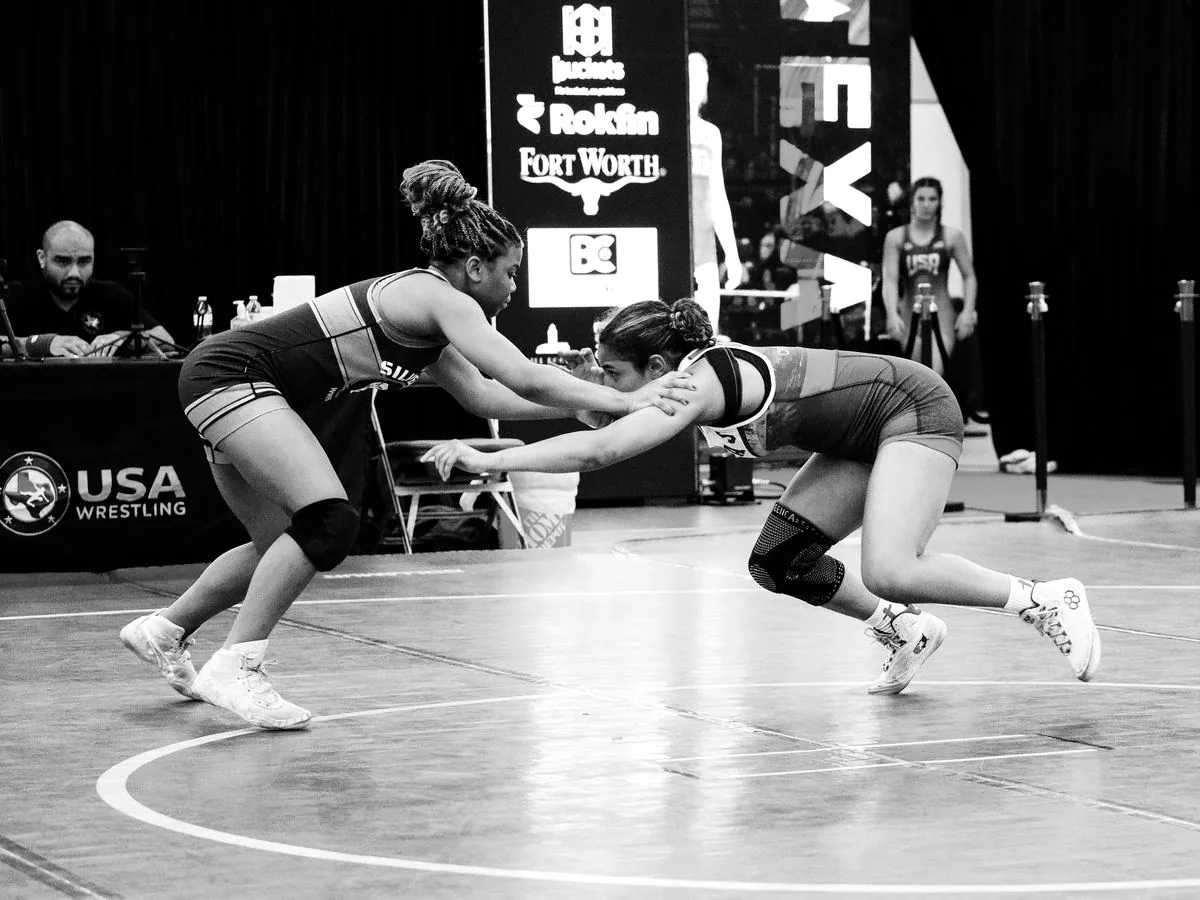
For generations, Texas was football country.
Today, it may be something else entirely.
Not long ago, if you wanted to find the center of American combat sports, you would have looked elsewhere. Wrestling belonged to Pennsylvania, Iowa, Oklahoma, and Ohio. MMA was centered in Las Vegas, Southern California, and Florida. Jiu-jitsu’s American roots stretched from California to New York.
Today, the conversation has changed.
Over the last decade—and especially since 2020—Texas has emerged as arguably the most influential combat sports state in America. Elite wrestlers, UFC fighters, world champions, and professional grapplers have flooded into the Lone Star State, creating an ecosystem unlike anything the sport has seen before.
The transformation wasn’t planned.
It simply happened.
And in the process, Texas became the epicenter of modern combat sports.
The No-Gi Revolution
The story begins with no-gi jiu-jitsu.
For years, the most dominant team in the sport was the Danaher Death Squad, led by John Danaher. The team fundamentally changed modern grappling through systematic approaches to leg locks, back attacks, and positional control. Their influence can still be seen in nearly every major grappling room in the world today.
Then they moved to Texas.
As athletes searched for places to train during the COVID era, Austin emerged as an unlikely destination. The move accelerated when Joe Rogan relocated to Texas, bringing unprecedented attention to the state’s rapidly growing combat sports community.
Before the ink had even dried on their Texas leases, the Danaher Death Squad had split into two rival powerhouses.
John Danaher and Gordon Ryan formed New Wave. Craig Jones, Nicky Rodriguez, and Nicky Ryan—Gordon’s younger brother—formed B-Team.
Former teammates became rivals, and even the Ryan brothers found themselves on opposite sides of the divide.
For grappling fans, Austin suddenly became the center of the universe.
The migration followed.
Elite competitors from California, New York, New Jersey, Pennsylvania, and nearly every major grappling region began relocating to Texas. Some came to train. Others came to teach. Many simply wanted to be part of what was becoming the most important no-gi community on earth.
The result was a concentration of talent unlike anything modern jiu-jitsu had ever experienced.
Austin’s Homegrown Grappling Stars
While New Wave and B-Team brought established stars to Texas, Austin was simultaneously producing elite competitors of its own.
Few examples illustrate that better than brothers Andrew and William Tackett.
Representing Brazilian Fight Factory, the Tackett brothers have become two of the most exciting competitors in professional grappling. In 2024, they made history by both winning ADCC West Coast Trials, becoming the first brothers to accomplish the feat at the same event.
Alongside them is Dorian Olivarez, one of the most accomplished young grapplers in America. A two-time ADCC Trials winner, USA Wrestling national champion, and WNO Lightweight Champion, Olivarez represents the next generation of Texas combat athletes—equally comfortable on a wrestling mat or a professional grappling stage.
The significance of athletes like the Tacketts and Olivarez extends beyond individual success.
They prove that Texas is no longer merely attracting talent.
It is developing it.
The MMA Boom
At the same time Austin was becoming the center of no-gi grappling, the rest of Texas was cementing its reputation as one of the premier MMA regions in the world.
No fighter embodies Texas MMA more than Derrick Lewis.
The Houston native became one of the most popular heavyweights in UFC history while setting the promotion’s all-time knockout record. His success helped demonstrate that elite fighters no longer needed to leave Texas to reach the sport’s highest level.
He was hardly alone.
Kamaru Usman grew up in Texas, wrestled in Texas, attended college in Texas, and went on to become one of the most dominant welterweight champions the UFC has ever seen.
Kevin Holland emerged from the Dallas-Fort Worth area and became one of the UFC’s most recognizable and entertaining fighters.
Ryan Spann has established himself among the UFC’s elite light heavyweights and recently added a victory over multiple-time jiu-jitsu world champion Marcus “Buchecha” Almeida, further demonstrating the level of talent being produced within the Texas MMA scene.
Long before women’s wrestling and women’s MMA experienced the growth they are seeing today, fighters such as Montana De La Rosa helped put North Texas on the map. A longtime UFC veteran, De La Rosa became one of the state’s most recognizable female fighters and proved that athletes from Texas could compete on the sport’s biggest stage. Alongside fighters such as Macy Chiasson, she helped establish Dallas-Fort Worth as a legitimate destination for women’s MMA while contributing to a combat sports culture that continues to thrive today.
Their success helped create a pathway for the next generation of female athletes emerging from Texas wrestling rooms, jiu-jitsu academies, and MMA gyms. As participation in women’s combat sports continues to surge throughout the state, the impact of pioneers like De La Rosa and Chiasson is still being felt.
Ramiz Brahimaj represents another example of the talent developed within the Texas MMA ecosystem. After beginning his professional journey in Dallas and developing at Fortis MMA, Brahimaj fought his way to the UFC and continues to establish himself as a dangerous welterweight.
Collectively, they represent only a fraction of the talent now competing at the sport’s highest level from Texas.
The Fortis MMA Effect
No discussion of Texas MMA is complete without Fortis MMA.
Under the leadership of Sayif Saud, the Dallas-based gym has become one of the most respected training camps in the world.
Fortis is not merely producing UFC fighters.
It is producing an environment.
The room is filled with elite wrestlers, high-level grapplers, UFC veterans, and hungry prospects all working together under a coaching staff that has earned widespread respect throughout the sport.
The gym has produced and developed fighters including Geoff Neal, Ryan Spann, Alex Morono, Diego Ferreira, Damon Jackson, Alonzo Menifield, Macy Chiasson, Charles Johnson, and numerous others who have competed on the sport’s biggest stage.
Its reputation has grown so strong that championship-caliber athletes from outside the organization have sought out Saud’s coaching. Former UFC Flyweight Champion Brandon Moreno’s successful title run further elevated Fortis’ standing within the MMA community and reinforced the gym’s reputation as one of the premier camps in the sport.
While many gyms can produce talented fighters, few consistently create athletes capable of competing at the UFC level.
Fortis has become one of those places.
Wrestling: The Foundation Beneath It All
As impressive as Texas’ jiu-jitsu and MMA growth has been, the foundation of the state’s combat sports success may be wrestling.
For decades, wrestling was considered secondary to traditional powerhouse states such as Pennsylvania, Iowa, Ohio, Oklahoma, and New Jersey.
That gap is rapidly disappearing.
Texas now routinely produces nationally ranked wrestlers, Fargo All-Americans, NCAA recruits, and international competitors.
The rise of girls wrestling has accelerated the growth even further.
Perhaps no athlete better represents Texas wrestling’s ascent than Bo Nickal.
Before becoming a three-time NCAA Champion, U23 World Champion, and one of MMA’s fastest-rising stars, Nickal was a three-time Texas state champion at Allen High School.
Today, his success serves as proof that Texas wrestlers can compete with anyone in the country.
At the international level, Olympic Gold Medalist Tamyra Mensah-Stock remains one of the greatest athletes Texas wrestling has ever produced. Her journey from Morton Ranch High School in Katy to the top of the Olympic podium helped inspire a generation of young wrestlers throughout the state.
The growth is also visible in Team Texas.
At Fargo, the nation’s premier wrestling tournament, Texas has become an increasingly consistent presence on the podium. In 2025, Team Texas’ 16U girls finished second nationally while producing multiple national champions and All-Americans.
That success is no accident.
Across the state, wrestling clubs are producing athletes capable of competing nationally. More Texas wrestlers are earning Division I opportunities than ever before. Girls wrestling continues to experience explosive growth. The talent pool grows deeper every year.
What was once considered an emerging wrestling state is quickly becoming a legitimate national power.
The Future
The rise of Texas combat sports is not the result of a single athlete, coach, or organization.
It is the result of all of them.
The world’s best grapplers moved to Austin.
Elite MMA camps flourished in Dallas and Houston.
Wrestling participation exploded throughout the state.
The result is a combat sports ecosystem unlike any in America.
Whether it’s an ADCC champion training in Austin, a UFC contender preparing at Fortis MMA, or a young wrestler representing Team Texas at Fargo, the message is becoming increasingly clear.
The future of combat sports isn’t coming to Texas.
It’s already here.